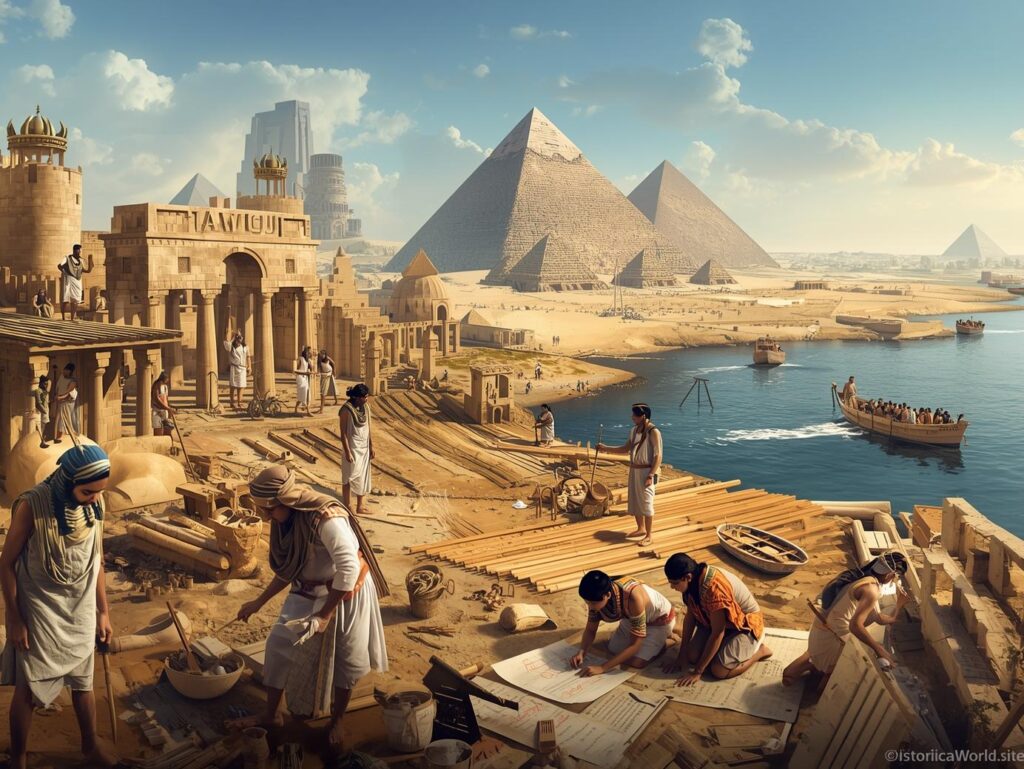

Daily life in Egypt followed patterns shaped by land, river use, belief, and labor systems. People organized time around farming cycles, family duties, and religious practice. Life differed by role, yet many routines remained shared across society. Food production, housing, work, and worship formed the base of everyday existence.
The Role of the Nile River
The Nile served as the center of life. Its flooding cycle guided farming and settlement. When water levels rose, fields received soil deposits. When water withdrew, planting began. This cycle repeated each year and provided food security.
People built homes near the river to access water and transport routes. Boats moved goods and people. Fishing supported diet. The river also connected villages and cities, allowing exchange of tools, crops, and ideas.
Family Structure and Household Life
Families formed the core social unit. Households often included parents, children, and relatives. Marriage created partnerships based on shared labor and care. Women managed homes, food preparation, and child care. Men worked fields, crafts, or trade.
Children learned roles through observation and participation. Education began at home. Some boys entered formal training for writing or administration. Girls learned household skills. Family bonds shaped identity and duty.
Housing and Living Spaces
Homes used mud bricks and reed. Roofs remained flat and served as work or rest areas. Rooms included storage spaces and living areas. Wealth influenced house size and layout.
Furniture included beds, stools, and chests. Cooking took place in open areas or small rooms. Lighting came from oil lamps. Daily routines centered on these spaces.
Clothing and Personal Care
Clothing used linen from plant fibers. Men wore skirts or wraps. Women wore dresses. Clothing varied by role and wealth. Jewelry held value for decoration and belief.
Personal care included washing, grooming, and scent use. Oils protected skin from sun and dryness. Cleanliness held social and religious importance.
Food and Diet Patterns
Diet relied on grain, vegetables, fruit, fish, and meat. Bread formed the main food item. Beer served as a common drink. Meat consumption varied by access and occasion.
Meals occurred at home or work sites. Food preparation involved grinding grain, baking, and cooking stews. Sharing meals strengthened family bonds.
Farming and Labor Activities
Most people worked in agriculture. Tasks included plowing, planting, watering, and harvesting. Labor followed seasonal cycles. Tools included sickles and plows.
State projects required labor during flood periods. Workers built structures, canals, and storage facilities. Payment often came in food or goods.
Craft Work and Trade Roles
Some people worked as craft producers. Pottery, weaving, metalwork, and stone carving supported daily needs and trade. Skills passed through training or family lines.
Trade linked regions through land and river routes. Goods exchanged included grain, cloth, tools, and raw materials. Markets served as exchange centers.
Education and Writing Use
Writing supported administration and trade. Scribes trained for years. Schools taught writing, math, and record keeping. Literacy remained limited to select groups.
Written records tracked grain storage, labor, and laws. Writing also preserved stories and belief texts. Education offered paths to state roles.
Religion and Daily Practice
Religion shaped daily actions. People honored gods through prayer and offerings. Shrines existed in homes and temples. Rituals marked events and cycles.
Priests managed temples and ceremonies. Belief influenced decisions related to health, work, and law. Life events connected to divine will.
Health, Medicine, and Care
Health care combined treatment and belief. Healers used herbs, tools, and spoken formulas. Records described symptoms and treatments.
Injury and illness affected work and survival. Clean water and food handling reduced risk. Health knowledge passed through practice and text.
Law and Social Order
Rules governed behavior and property. Officials enforced laws and resolved disputes. Punishment varied by offense and status.
Order relied on cooperation and duty fulfillment. Respect for authority supported stability. Law linked to belief and governance.
Entertainment and Leisure
Leisure included music, games, and storytelling. Instruments supported music at gatherings. Board games provided entertainment. Festivals marked seasonal and religious events.
Sports and physical activity occurred during free time. Social gatherings strengthened community ties.
Death and Burial Customs
Death marked a transition rather than an end. Burial practices reflected belief in afterlife. Bodies received preparation and placement in tombs.
Grave goods supported journey beyond life. Rituals honored the dead and maintained family connection.
Differences by Social Role
Life varied by status. Leaders and officials accessed resources and education. Workers focused on labor and family support. Slaves performed assigned tasks.
Despite differences, shared beliefs and practices united society. Common rituals and reliance on the river created collective identity.
Continuity Across Generations
Daily routines passed through generations. Knowledge transferred through work, speech, and practice. Stability supported long-term survival.
Changes occurred through leadership shifts and contact with other regions. Core patterns remained present over time.
Conclusion
Daily life in Egypt centered on routine, belief, and cooperation. The river guided work and settlement. Families formed support systems. Labor, worship, and law shaped structure. These daily patterns sustained society for long periods and influenced later cultures.