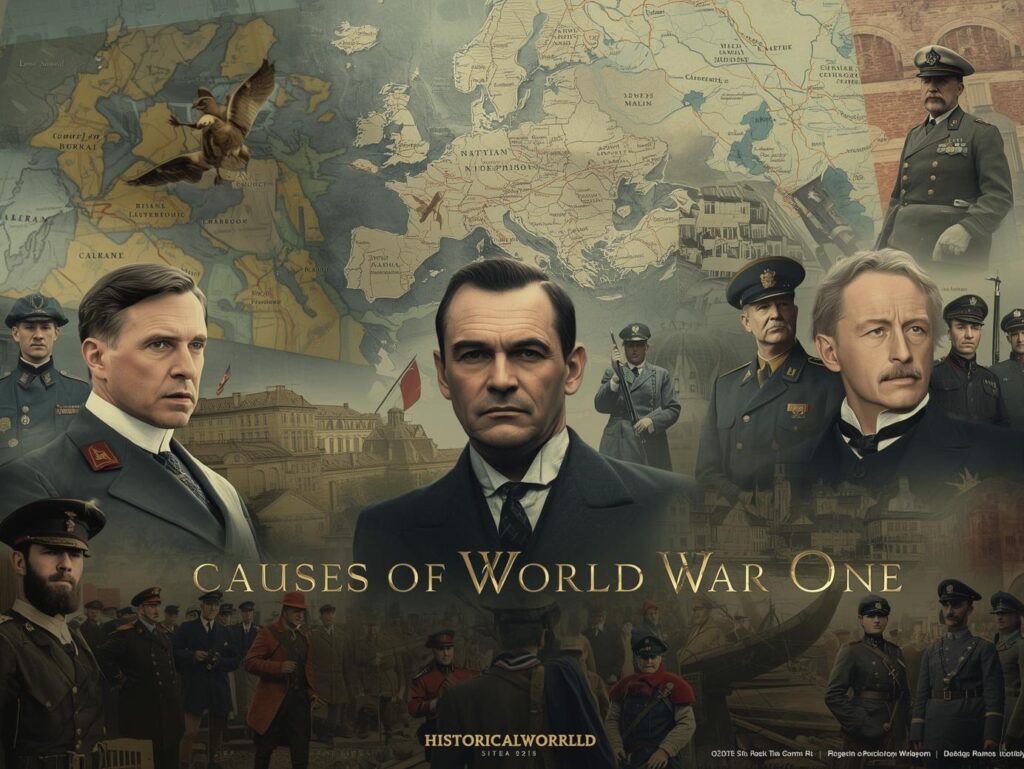

World War One emerged from a combination of political, economic, and social factors across Europe. The conflict involved multiple countries and alliances, leading to a global war. Understanding its causes requires examining tensions, militarism, alliances, nationalism, and events that escalated conflict.
Political Tensions and Rivalries
European powers competed for influence, territory, and resources. Germany, Britain, France, Austria-Hungary, and Russia sought to strengthen their positions. Rivalries created suspicion and competition. Political leaders aimed to protect national interests while monitoring rivals.
Colonial ambitions extended tensions beyond Europe. Overseas territories provided economic resources and strategic advantage. Conflicts over colonies contributed to distrust and rivalry among powers.
Alliance Systems
Countries formed alliances to secure support in case of conflict. The Triple Alliance included Germany, Austria-Hungary, and Italy. The Triple Entente included Britain, France, and Russia. Alliances created a web of obligations that could escalate local conflicts.
Political decisions depended on obligations to allies. A dispute involving one nation could quickly involve others. Alliances intensified tension and increased the risk of a larger war.
Nationalism
National identity motivated political and social actions. Groups sought independence or dominance based on cultural, linguistic, or ethnic ties. Nationalism encouraged competition, mistrust, and conflict over territory.
Minority groups within empires pressed for autonomy. Nationalist movements challenged ruling authorities and influenced foreign policy. National pride contributed to willingness to engage in military action.
Militarism and Arms Race
Military build-up increased tensions. Nations expanded armies, navies, and weapons production. Military planning became central to national strategy. Governments prepared for potential conflict in advance.
Competition for technological and numerical superiority created anxiety. Military readiness influenced political decisions and reduced flexibility in diplomacy.
Economic Factors
Industrialization and trade influenced relations between states. Economic growth depended on access to markets, raw materials, and trade routes. Competition for economic advantage fueled rivalry and contributed to tension.
Financial systems and infrastructure investments tied nations together and created interdependence. Economic disputes influenced foreign policy and military planning.
Diplomatic Failures
Diplomatic efforts often failed to resolve disputes. Conferences, treaties, and negotiations sometimes intensified suspicion rather than building trust. Secret agreements and misunderstandings reduced the ability to prevent conflict.
Diplomacy was constrained by national interest, alliance obligations, and public opinion. Miscalculation increased the risk of war.
Crisis Events Leading to War
The assassination of Archduke Franz Ferdinand of Austria-Hungary triggered immediate conflict. Austria-Hungary issued demands to Serbia, which led to mobilization of allies. Local disputes escalated into a larger war due to alliances and political pressure.
Subsequent declarations of war involved Germany, Russia, France, and Britain. A regional incident became a global conflict due to interconnected commitments.
Role of Imperial Competition
Colonial empires expanded in Africa, Asia, and the Middle East. Conflicts over land, trade, and influence contributed to distrust between powers. Imperial competition reinforced military planning and alliance formation.
Colonial subjects were drawn into war through conscription, resource provision, and military service. Imperial rivalry amplified tensions in Europe and abroad.
Social Factors
Public opinion influenced government decisions. Press, propaganda, and nationalist movements encouraged support for military action. Youth and military service were valorized, increasing willingness to participate in war.
Society expected leaders to act decisively to defend national interests. Social pressures constrained diplomacy and negotiation.
Long-Term Effects of Causes
The combination of political tension, alliance obligations, nationalism, militarism, economic competition, and diplomacy failure created conditions for a large-scale conflict. No single factor caused war; it was the interaction of these elements over time.
Historians note that the war reflected structural pressures rather than isolated events. Societal expectations, leadership decisions, and military planning all contributed.
Lessons from Analysis
Studying the causes of World War One shows how interconnected political, economic, and social systems can escalate conflict. Alliance systems, competition, and nationalism can amplify local incidents into global crises. Early recognition of tensions and cooperative solutions may reduce risk.
Conclusion
World War One resulted from a combination of rivalry, alliances, militarism, nationalism, economic competition, and diplomatic failure. Local incidents escalated due to obligations and social pressures. Understanding the causes helps explain the scope of the conflict and its global impact.