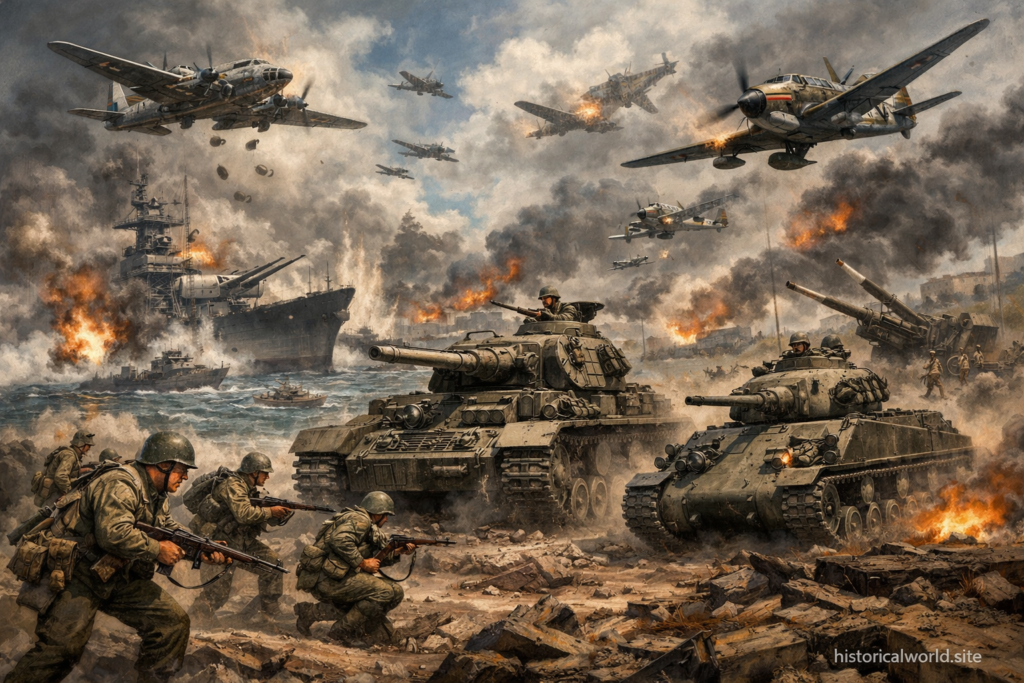

World War Two involved multiple countries and theaters of conflict. Battles occurred on land, sea, and in the air. Understanding major battles provides insight into military strategy, alliances, and the course of the war. These battles shaped political outcomes and influenced post-war developments.
Overview of Conflict
The war began in 1939 with Germany’s invasion of Poland. Other nations joined through alliances and obligations. Battles occurred across Europe, Africa, Asia, and the Pacific. Strategy relied on coordination of armies, navies, and air forces.
Control of territory, resources, and population centers influenced military planning. Each side sought advantage through offensive and defensive campaigns.
Land Battles in Europe
European land battles included Poland, France, and the Soviet Union. Armies used infantry, tanks, artillery, and fortifications. Movement and supply lines determined success.
The Battle of Stalingrad involved urban combat, encirclement, and attrition. Terrain, weather, and logistics influenced outcomes. The battle affected morale and strategic positions.
The Normandy landings involved amphibious assault, coordination of air and naval support, and rapid movement inland. Success depended on planning, timing, and cooperation among forces.
Battles in Africa
North African campaigns involved desert warfare. Armies relied on mobility, supply management, and armored divisions. Control of ports and supply routes was crucial.
Conflicts included engagement between Axis and Allied forces. Terrain and climate shaped military tactics. Victories and losses influenced control of Mediterranean access and regional strategy.
Naval Battles
Naval battles focused on control of shipping lanes, supply transport, and sea dominance. Aircraft carriers, battleships, and submarines played key roles. Convoys and blockades influenced strategic advantage.
Battles such as Midway and the Atlantic campaign determined the movement of goods, personnel, and equipment. Naval power affected the outcome of land and air operations.
Air Battles and Strategic Bombing
Air combat involved fighter planes, bombers, and reconnaissance aircraft. Control of the sky allowed support for land and naval operations. Strategic bombing targeted infrastructure, supply lines, and industrial production.
Air campaigns affected civilian populations and economic stability. Air superiority influenced timing and effectiveness of ground assaults.
Pacific Theater Battles
Battles in the Pacific included island campaigns, naval engagements, and amphibious assaults. Control of islands determined supply lines and staging points for further operations.
Campaigns involved coordination of land, sea, and air forces. Terrain and distance presented logistical challenges. Outcomes influenced broader strategy in the Pacific region.
Technology and Weapons
New technology shaped battles. Tanks, aircraft, naval vessels, and communications equipment influenced planning and execution. Weapons systems affected mobility, firepower, and defensive strategy.
Intelligence and code-breaking provided tactical advantages. Technology allowed coordination across multiple theaters and improved efficiency of operations.
Strategy and Planning
Planning involved coordination among allied and Axis nations. Commanders considered terrain, resources, and enemy capabilities. Operations often required simultaneous action across different regions.
Flexibility and adaptation were necessary. Logistics, supply management, and intelligence influenced success. Strategic decisions had long-term consequences for political and military outcomes.
Casualties and Impact
Major battles caused significant military and civilian casualties. Losses affected manpower, morale, and capacity for continued operations. Populations experienced displacement, shortages, and disruption.
Casualty management and medical care were essential. Impact on society influenced political and social responses during and after the war.
Outcomes and Consequences
Major battles determined territorial control, weakened opposing forces, and influenced negotiation positions. Successes and failures shaped the course of the war and post-war settlements.
The balance of power shifted with key victories. Defeated forces lost territory, resources, and influence. Allied victories facilitated liberation and reconstruction.
Lessons from Battles
Analysis of battles shows the importance of preparation, coordination, and adaptability. Control of resources, communication, and supply lines proved essential. Integration of land, sea, and air forces determined operational success.
Studying battles provides insight into strategy, leadership, and decision-making. It also informs understanding of human and societal costs of large-scale conflict.
Conclusion
Major battles of World War Two shaped the course of the war and influenced global history. Land, sea, and air engagements affected strategy, territorial control, and political outcomes. Understanding these battles provides perspective on military planning, logistics, and human impact. The outcomes influenced post-war reconstruction, international relations, and the development of military doctrine.