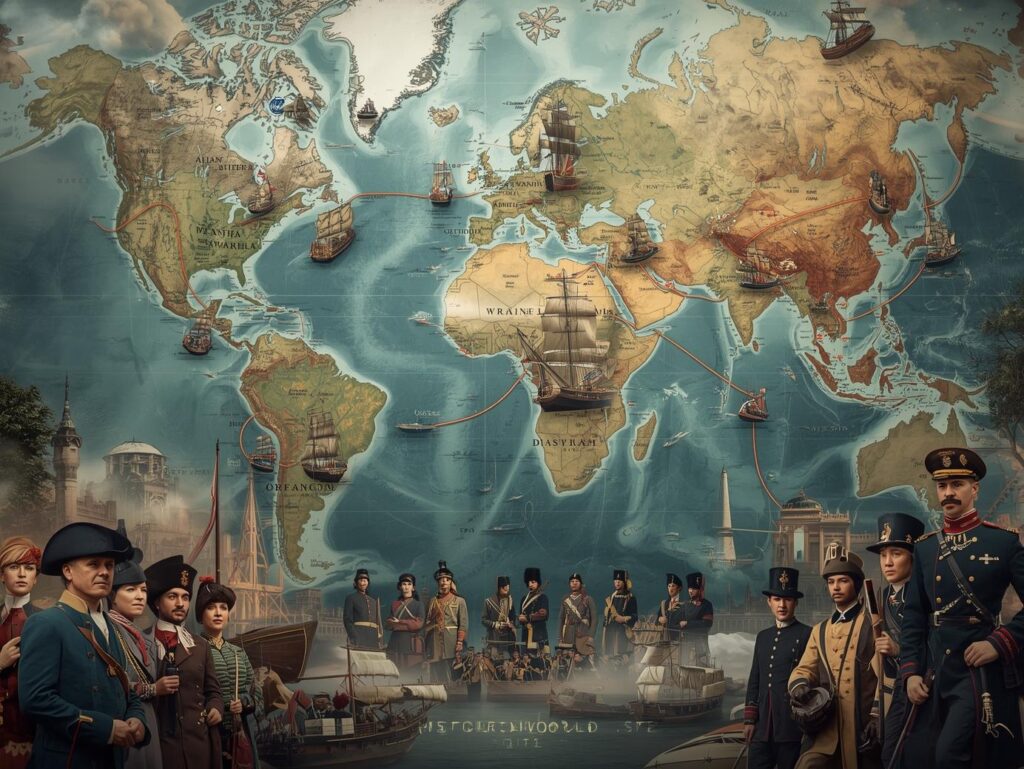

The British Empire was one of the largest empires in history, extending its influence across multiple continents. Its growth relied on exploration, trade, military conquest, and governance. Understanding the empire provides insight into politics, economy, culture, and international relations from the 16th to the 20th century.
Origins of the Empire
The empire began with overseas exploration and trade. English navigators and merchants established outposts in the Americas, Africa, and Asia. Early ventures combined economic opportunity with political expansion.
Monarchs and investors supported expeditions. Maritime technology and navigation allowed travel and control of distant territories. Trade routes linked colonies to the metropole.
Expansion and Colonization
Expansion involved settlements, trade networks, and military presence. Colonies provided raw materials, markets for goods, and strategic locations. Administration adapted to local conditions and resources.
Conflicts with indigenous populations, other European powers, and internal resistance shaped territorial control. Diplomacy, negotiation, and force were used to secure influence.
Trade and Economic Structure
Trade formed the economic foundation of the empire. Goods included spices, textiles, precious metals, and agricultural products. Merchant networks connected Europe, Africa, the Americas, and Asia.
Economic policies included tariffs, monopolies, and regulation of production. Trade routes and ports facilitated movement of goods and people. Economic success supported military and administrative operations.
Governance and Administration
Governance relied on a combination of direct rule, local authority, and colonial administration. Governors, councils, and officials enforced laws, collected taxes, and maintained order.
Legal systems were introduced or adapted to local conditions. Administrative practices balanced control from the metropole with regional needs. Communication and infrastructure supported oversight.
Military Organization
Military forces protected colonies, trade routes, and borders. Armies and navies were stationed in key locations. Recruitment, training, and logistics ensured readiness.
Conflicts included wars with other European powers, local uprisings, and resistance to taxation or labor requirements. Military presence reinforced authority and facilitated expansion.
Cultural Influence
The empire influenced language, education, religion, and social structures. English became a common language for administration and trade. Schools and religious institutions spread cultural norms and values.
Cultural exchange occurred in both directions. Colonized regions influenced architecture, agriculture, and knowledge in Britain. Travel, trade, and migration contributed to global interaction.
Scientific and Technological Development
Exploration and administration encouraged mapping, navigation, and scientific observation. Advances in agriculture, medicine, and communication were applied across territories.
Innovation supported trade, military operations, and governance. Knowledge collected from colonies contributed to European understanding of geography, biology, and climate.
Challenges and Resistance
Resistance emerged from indigenous populations, rival powers, and internal dissent. Revolts, protests, and diplomatic conflicts required military and administrative responses.
Challenges included maintaining supply lines, communication, and cohesion across distant territories. Balancing local autonomy with central authority was an ongoing task.
Impact on the World
The empire influenced global trade, governance, and culture. Legal and administrative frameworks were introduced in multiple regions. Economic and political integration reshaped international relations.
Colonial policies affected population movements, urbanization, and labor systems. The empire’s presence created networks of exchange, innovation, and communication.
Decline of the Empire
Decline resulted from wars, economic strain, political change, and growing nationalism in colonies. World conflicts and competition reduced Britain’s capacity to maintain control.
Independence movements and decolonization reshaped political boundaries. Transition from direct rule to independence reflected both global trends and local pressures.
Legacy and Influence
The empire left lasting influence on law, language, education, and governance. Former colonies maintained connections through trade, culture, and international organizations.
Global networks, infrastructure, and legal systems established during the empire influenced modern development. Understanding the empire provides context for contemporary politics and international relations.
Conclusion
The British Empire expanded through exploration, trade, military action, and administration. It influenced global politics, economy, and culture. Resistance, governance challenges, and global competition shaped its history. The empire’s legacy continues to affect law, language, trade, and international relationships worldwide.