
Medieval towns formed centers of trade, craft, and governance. Towns developed around markets, castles, and rivers, supporting regional economies. Life in these towns differed from rural areas. People lived close together, worked in specialized trades, and participated in communal activities. Understanding town life provides insight into social, economic, and political structures of the Middle Ages.
Formation and Growth of Towns
Towns often emerged near castles, religious sites, or trade routes. People gathered to exchange goods and services. Markets attracted farmers, artisans, and merchants. Over time, small clusters grew into structured communities.
Population growth supported diverse activities. Towns developed streets, walls, and public spaces. Urban planning reflected functional needs rather than aesthetics. Expansion often followed economic opportunity and protection requirements.
Social Structure and Occupations
Town residents held specific roles. Merchants and traders facilitated exchange. Artisans produced tools, clothing, and household items. Laborers performed construction and maintenance tasks. Officials and clerks administered governance and law.
Guilds organized trades and maintained standards. Apprentices learned skills under masters. Social hierarchy existed but was more flexible than rural feudal structures. Movement between roles occurred through trade, skill, or wealth.
Housing and Living Conditions
Housing varied by wealth and occupation. Most residents lived in small, closely built structures. Homes included living space and storage. Roofs often served as work areas. Streets connected houses to markets and public spaces.
Water access and sanitation were limited. Wells and public fountains provided drinking water. Waste disposal required community coordination. Town life demanded cooperation for hygiene and safety.
Markets and Economic Activity
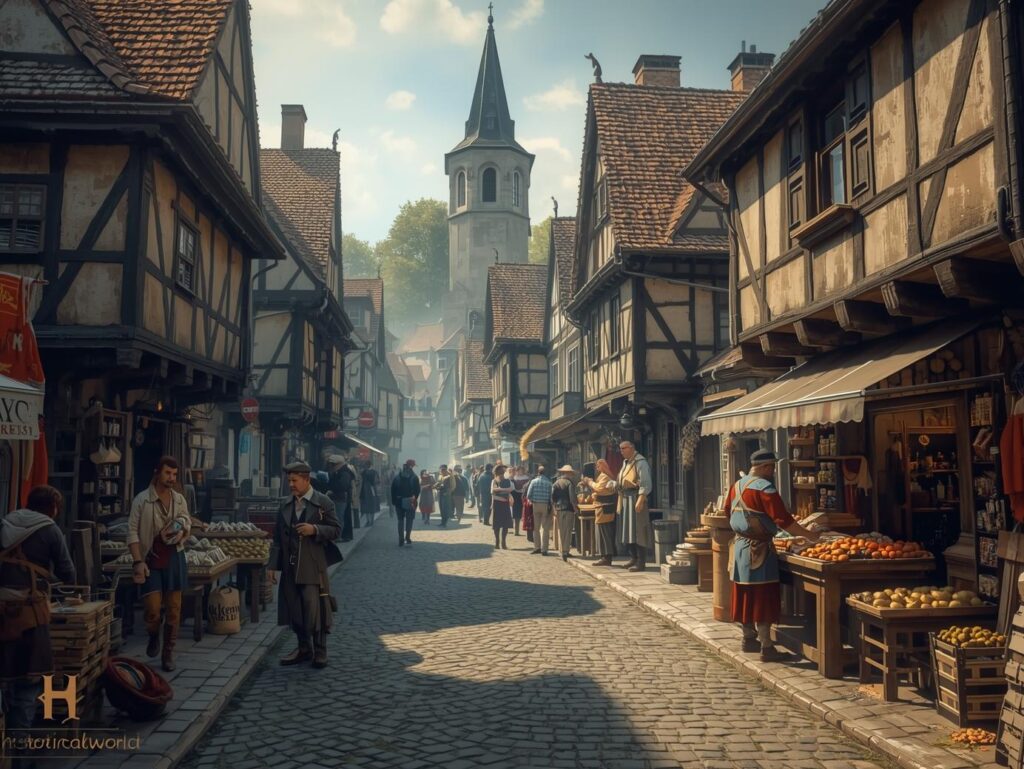
Markets served as centers for buying and selling. Farmers brought surplus goods. Artisans sold tools, pottery, and clothing. Merchants exchanged imported items such as spices, cloth, and metal.
Markets operated on scheduled days. Trade brought income for the town and state. Coins and barter were common. Economic activity created interdependence among residents.
Food and Diet
Diet included grains, vegetables, and occasional meat. Bread and porridge formed staples. Preservation methods included drying, smoking, and salting. Food preparation often occurred in small kitchens or shared spaces.
Feasts occurred during festivals, religious observances, or important events. Shared meals reinforced community bonds. Diet varied based on wealth and access.
Religion and Community Life
Churches served as religious, social, and administrative centers. Clergy led worship, advised rulers, and recorded information. Religious festivals structured the calendar and daily routines.
Confraternities and charitable groups supported the poor and sick. Religion influenced behavior, law, and education. Faith connected residents and guided public life.
Governance and Law
Town governance included elected officials, appointed leaders, or representatives of guilds. Councils managed taxes, market rules, and public works. Laws enforced order, resolved disputes, and regulated trade.
Punishments varied depending on offense and social status. Courts settled conflicts over property, contracts, and behavior. Governance ensured survival in dense urban communities.
Crafts and Guilds
Craft production formed the backbone of town economies. Blacksmiths, weavers, shoemakers, and carpenters supplied necessary goods. Guilds supervised training, pricing, and quality.
Apprentices trained under masters for years. Skilled labor supported trade and wealth accumulation. Guilds also provided social networks and mutual aid for members.
Education and Literacy
Education focused on clerical skills, trade knowledge, and apprenticeships. Writing was important for merchants and officials. Literacy rates varied but clerks and guild members maintained records.
Schools associated with churches or guilds provided instruction. Education supported administrative and economic functions, linking towns to broader society.
Health and Sanitation
Limited sanitation increased disease risk. Wells, public baths, and waste management were essential. Physicians and herbalists treated illness. Community cooperation maintained hygiene.
Epidemics influenced population and work. Measures included quarantine, cleaning streets, and ritual observances.
Festivals and Leisure
Town life included communal events. Festivals celebrated religious, seasonal, or political occasions. Music, games, and storytelling provided recreation. Residents attended fairs and market events for both trade and leisure.
Social gatherings strengthened bonds and facilitated exchange of information and goods.
Conflict and Defense
Towns required protection from raiders, armies, and bandits. Walls, gates, and watchtowers formed defensive structures. Town militias organized to respond to threats. Cooperation was essential for security.
Conflict also occurred internally over trade disputes or governance. Councils mediated disputes to maintain order.
Interaction with the Countryside
Towns relied on surrounding rural areas for food and resources. Farmers supplied grain, vegetables, and livestock. Trade connected towns and villages, forming regional networks. Towns provided markets, goods, and services in return.
Economic interdependence reinforced stability and social connections. Towns acted as centers for coordination and regulation.
Challenges of Urban Life
Crowded streets, limited sanitation, and fire risk were persistent challenges. Disease spread rapidly in dense populations. Residents adapted through communal work, regulations, and planning.
Economic fluctuations affected livelihoods. Political instability influenced safety and trade. Towns relied on governance and cooperation for survival.
Conclusion
Life in medieval European towns centered on work, trade, religion, and community. Residents performed specialized roles while relying on shared structures. Markets, guilds, and councils organized production and governance. Urban life differed from rural patterns but connected to surrounding regions. Towns provided centers of exchange, regulation, and social cohesion, forming an essential part of medieval society.