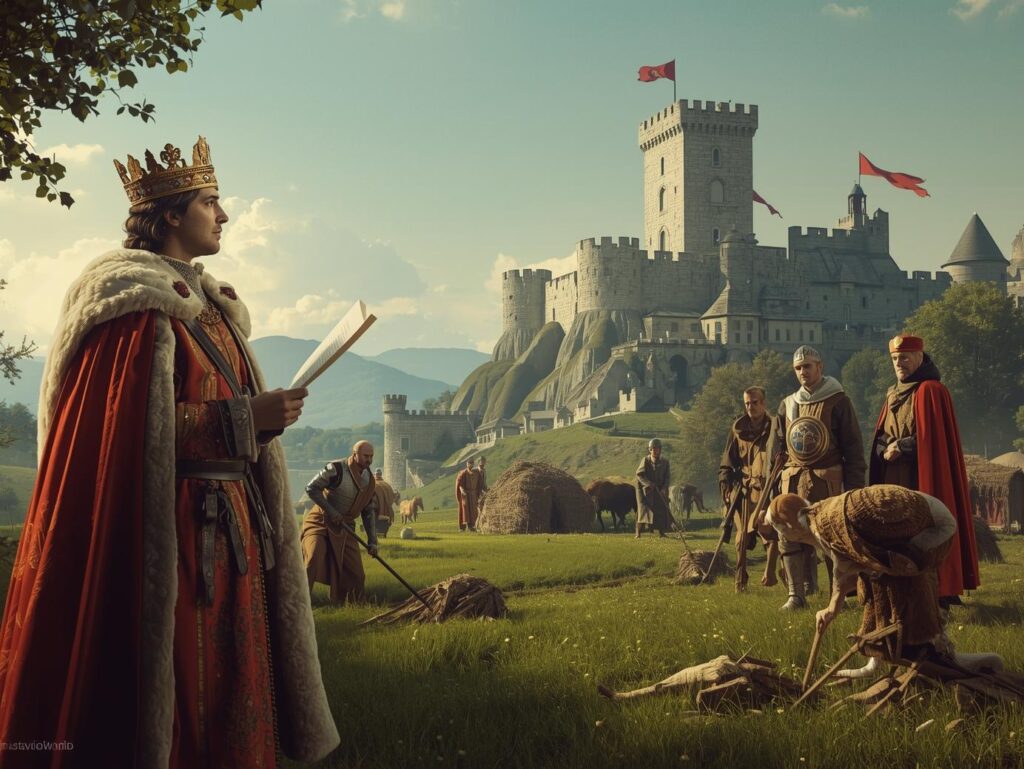

The feudal system structured society during the Middle Ages in Europe. It organized land, labor, and loyalty through a hierarchy that linked kings, nobles, knights, and peasants. This system allowed cooperation and defense in times of conflict. Understanding its organization provides insight into medieval politics, economy, and social order.
Land Ownership and Hierarchy
Land formed the basis of power. The king owned all land and granted portions to nobles. In return, nobles provided loyalty, military support, and advice. Nobles distributed land to vassals, often knights, who performed military service. Peasants, or serfs, worked the land and provided food and goods to those above them in the hierarchy.
This hierarchy created mutual obligation. Each level had defined responsibilities. Kings maintained control, nobles protected land, knights defended, and peasants sustained production. Land ownership also determined social status.
Role of the King
The king held the highest authority. He granted fiefs to nobles and ensured loyalty through oaths. Kings relied on nobles to maintain law, collect taxes, and defend regions. In times of war, kings called upon vassals for armies. The king also acted as a judge in disputes between nobles.
The king’s power depended on relationships with nobles. Centralized authority was limited in early feudal periods. Over time, kings strengthened control by building alliances and establishing legal structures.
Nobles and Their Duties
Nobles managed estates, collected rents, and administered local law. They provided protection to peasants and oversaw agriculture. Nobles also trained and equipped knights. They were responsible for maintaining fortifications and ensuring safety within their territory.
Nobles had obligations to the king. They attended councils, paid taxes, and offered soldiers. Their position required both administration and loyalty.
Knights and Military Service
Knights served nobles in exchange for land or income. Training began in childhood as pages and squires. Knights learned combat skills, horsemanship, and the code of conduct. They defended estates, fought in wars, and upheld the feudal order.
Knights also served ceremonial and legal roles. They could be called to tournaments, courts, or regional defense. Their loyalty linked land, military service, and social duty.
Peasants and Daily Labor
Peasants worked land owned by nobles. They planted crops, tended animals, and maintained property. In return, they received protection, access to farmland, and sustenance. Serfs were bound to the land and could not leave without permission.
Peasant life followed seasonal cycles. Work was shared among families. Some peasants specialized in crafts or local trade. Their labor formed the foundation of the feudal economy.
Manor System
The manor functioned as the economic unit of feudal society. It included fields, forests, pastures, and a village. The lord’s residence and peasants’ homes were central. Manors produced most goods needed locally, reducing dependence on trade.
Surplus crops could be sold or stored. Peasants performed specific duties, including milling grain, repairing buildings, and maintaining tools. Manorial organization reinforced hierarchical relationships.
Feudal Contracts and Obligations
Feudal relationships were formalized through oaths and contracts. Vassals swore loyalty to their lords. In return, lords provided protection and land. These contracts defined military, financial, and social duties.
Contracts could be inherited, sold, or renegotiated. Written or oral agreements ensured stability. The system relied on mutual understanding and accountability.
Law and Justice in Feudal Society
Law reflected local authority. Lords acted as judges for disputes within their domains. Justice varied by location. Kings established overarching legal principles, but local lords enforced rules day to day.
Disputes could involve land, labor, or personal conduct. Punishments ranged from fines to imprisonment. Social status influenced outcomes, with nobles often judged differently from peasants.
Economy and Trade
Feudal economies focused on self-sufficiency. Villages and manors produced food, clothing, and tools. Markets existed but were limited. Barter and coinage circulated depending on the region.
Trade expanded over time through fairs, towns, and river routes. Nobles gained income through rents and tolls. The economic system supported stability and hierarchical relationships.
Religion and Social Life
The church played a central role in medieval society. Clergy advised rulers, performed rituals, and educated communities. Religious observances structured calendars, holidays, and work schedules.
Monasteries acted as centers of learning, production, and charity. Faith reinforced feudal obligations and guided moral expectations. Religion linked communities across regions.
Conflict and Warfare
Conflicts arose over land, succession, or resources. Lords and knights engaged in skirmishes and wars. Castles served as defensive structures. Military service reinforced loyalty and hierarchy.
Feudal alliances shifted through marriage, treaties, and contracts. Local and regional conflicts shaped political landscapes.
Decline of Feudalism
Feudalism declined due to economic changes, population growth, and centralization of royal power. Trade and towns gained importance. Military innovations reduced reliance on knights. Peasant mobility increased, weakening manor control.
Legal systems centralized under kings. National identity replaced localized loyalties. Despite decline, feudal principles influenced law, social structure, and governance for centuries.
Conclusion
The feudal system structured medieval life through land, loyalty, and labor. Kings, nobles, knights, and peasants formed interdependent relationships. Manors and villages provided economic stability. Religion and law supported social order. This system allowed cooperation, defense, and survival during a period of limited central authority.